Preparing Your Dog for Meeting New People and Pets
- Why Preparing Your Dog for Meeting New People and Pets Matters
- Start with Calm Energy
- Use Positive Reinforcement
- Gradual Exposure Builds Confidence
- Teaching Polite Greetings
- Safe Introductions to Other Dogs
- Helping Your Puppy Feel Secure
- Nutrition and Wellness Support Social Development
- Consistency Makes the Biggest Difference
- The Big Hearted Breeders Approach
- FAQ
Preparing Your Dog for Meeting New People and Pets
Preparing your dog for meeting new people and pets is one of the most important steps you can take to help your puppy grow into a confident, friendly, well-balanced companion. With the right preparation, positive experiences, and thoughtful introductions, most dogs learn to greet strangers and other animals calmly and safely. For families bringing home a Mini Golden Retriever from Big Hearted Breeders, this process is especially important because early socialization helps shape the sweet, family-friendly temperament these dogs are known for.
Mini Golden Retrievers are naturally affectionate and people-focused, but even the most social puppy benefits from learning how to meet new people and animals in a calm and structured way. Thoughtful preparation builds confidence, prevents fear-based reactions, and helps your puppy develop healthy social skills that last a lifetime.
Why Preparing Your Dog for Meeting New People and Pets Matters
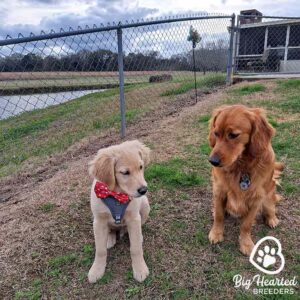 Dogs are not automatically comfortable in every social situation. Just like people, they learn through experience. When a dog is properly introduced to new environments, strangers, and other animals during puppyhood, they are far more likely to grow into a relaxed and friendly adult.
Preparing your dog for meeting new people and pets helps prevent many common behavioral issues.
- Fearful reactions toward strangers
- Jumping or overly excited greetings
- Defensive behavior around other dogs
- Anxiety in new environments
- Poor impulse control during social interactions
At Big Hearted Breeders, we believe early socialization is one of the most important foundations for a happy dog. Our puppies experience daily handling, exposure to family life, and positive interactions from the very beginning. That early groundwork makes it much easier for new owners to continue building strong social skills once their puppy goes home.
Start with Calm Energy
One of the biggest mistakes you can make when preparing your dog for meeting new people and pets is creating too much excitement around greetings. Loud voices, rushing toward the puppy, or overwhelming attention can easily make a young dog nervous or overly stimulated.
Dogs read energy extremely well. If the environment feels calm and predictable, they are much more likely to relax.
When introducing your puppy to someone new:
- Ask the person to approach slowly
- Keep voices calm and friendly
- Allow the puppy to approach at their own pace
- Avoid reaching directly over the dog’s head
- Reward calm behavior with praise or treats
This simple approach teaches your puppy that meeting new people is safe and positive.
Use Positive Reinforcement
Positive reinforcement is one of the most effective tools when preparing your dog for meeting new people and pets. When your puppy associates new experiences with rewards, their confidence grows quickly.
Treats, praise, and gentle encouragement help create positive emotional associations.
You can reinforce good behavior during introductions by rewarding your puppy when they:
- Remain calm while someone approaches
- Sit politely instead of jumping
- Greet another dog without pulling or barking
- Stay relaxed in a new environment
At Big Hearted Breeders, we strongly support positive reinforcement training methods. These techniques build trust between dogs and their families while encouraging healthy behavior.
Gradual Exposure Builds Confidence
 Preparing your dog for meeting new people and pets should be a gradual process. Throwing your puppy into a chaotic dog park or a crowded gathering too early can overwhelm them.
Instead, build their confidence step by step.
Start with simple experiences such as:
- Meeting a single calm visitor in your home
- Greeting a friendly neighbor during a walk
- Visiting a quiet park
- Spending time around one well-behaved dog
As your puppy becomes more comfortable, you can slowly increase the variety of environments and interactions they experience.
This gradual approach allows your dog to build positive experiences without feeling pressured.
Teaching Polite Greetings
One of the biggest goals when preparing your dog for meeting new people and pets is teaching polite greeting behavior. Puppies naturally want to jump, wiggle, and shower everyone with excitement. While adorable at first, that habit can quickly become problematic as they grow.
Teaching calm greetings early makes a huge difference.
A simple method many families use is to ask the puppy to sit before giving attention.
Here is how it works:
- Approach the person or dog slowly
- Ask your puppy to sit
- Reward calm sitting behavior
- Allow the greeting only after your puppy is calm
If your puppy jumps or becomes overly excited, simply pause the interaction until they settle again.
Mini Golden Retrievers are intelligent and eager to please, making them quick learners when consistent training is provided.
Safe Introductions to Other Dogs
Preparing your dog for meeting new people and pets also includes learning how to safely introduce them to other dogs.
Not every dog your puppy encounters will be a good playmate, so controlled introductions are important.
A safe first meeting often looks like this:
- Both dogs remain on leash
- Owners keep the leashes loose to avoid tension
- Dogs approach in a curved path rather than head-on
- Allow brief sniffing before separating
- Reward calm behavior
Short, positive meetings help dogs build good social skills while avoiding overwhelming situations.
Helping Your Puppy Feel Secure
 Confidence grows when dogs feel safe with their owners. During new interactions, your calm leadership helps reassure your puppy that everything is okay.
Pay attention to your dog’s body language. Signs that your puppy may need a break include:
- Tucked tail
- Lip licking
- Yawning in stressful moments
- Avoiding eye contact
- Backing away from interaction
If you see these signs, give your puppy space and allow them to relax. Forcing interactions can make fear worse rather than better.
At Big Hearted Breeders, we focus on raising puppies with stable temperaments so they can adapt to family life, visitors, and new environments with confidence.
Nutrition and Wellness Support Social Development
Physical health plays a surprisingly important role in behavior and social confidence. Puppies that receive balanced nutrition and proper wellness support are more likely to have stable energy levels and healthy development.
Many families in our program choose PawTree nutrition because it focuses on clean ingredients and balanced formulations designed to support long term health.
A healthy puppy is generally better equipped to handle new experiences, training, and social learning.
Consistency Makes the Biggest Difference
The key to successfully preparing your dog for meeting new people and pets is consistency. Puppies learn through repetition, and every positive experience strengthens their confidence.
Small daily interactions can make a big impact.
Try exposing your puppy to:
- New visitors at home
- Different walking routes
- Friendly neighbors
- Calm dogs in controlled environments
- New sights and sounds
Over time, these experiences build a dog who is comfortable, friendly, and adaptable.
Mini Golden Retrievers raised with this kind of guidance often become wonderful companions for families, children, and social environments.
The Big Hearted Breeders Approach
At Big Hearted Breeders, our goal is to raise puppies that transition smoothly into family life. From the beginning, our Mini Golden Retriever puppies are surrounded by gentle handling, everyday household activity, and positive human interaction.
This early foundation makes it much easier to prepare your dog to meet new people and pets once your puppy joins your home.
When responsible breeding, early socialization, positive training, and loving homes all work together, the result is exactly what every family hopes for: a happy, confident dog who enjoys the world around them.

FAQ
When should I start preparing my dog for meeting new people and pets?
Socialization should begin as early as possible during puppyhood. Most veterinarians and trainers recommend starting controlled introductions as soon as your puppy is safely vaccinated and able to explore new environments.
How do I stop my puppy from jumping on guests?
Teach your puppy to sit before greeting people. Reward calm sitting with treats and attention. If the puppy jumps, pause the interaction until they settle down.
What if my dog seems nervous around strangers?
Move slowly and allow your dog to approach at their own pace. Use treats and calm encouragement to build positive associations. Avoid forcing interactions.
Is it safe for my puppy to meet other dogs?
Yes, as long as the other dog is healthy, vaccinated, and well-behaved. Controlled introductions with calm dogs help puppies develop good social skills.
Do Mini Golden Retrievers usually get along with other pets?
Yes. Miniature Golden Retrievers are known for their friendly, social nature. With proper introductions and early training, they usually do very well with other dogs and pets in the home.